 Water Well
The Sound of Water in Kanem
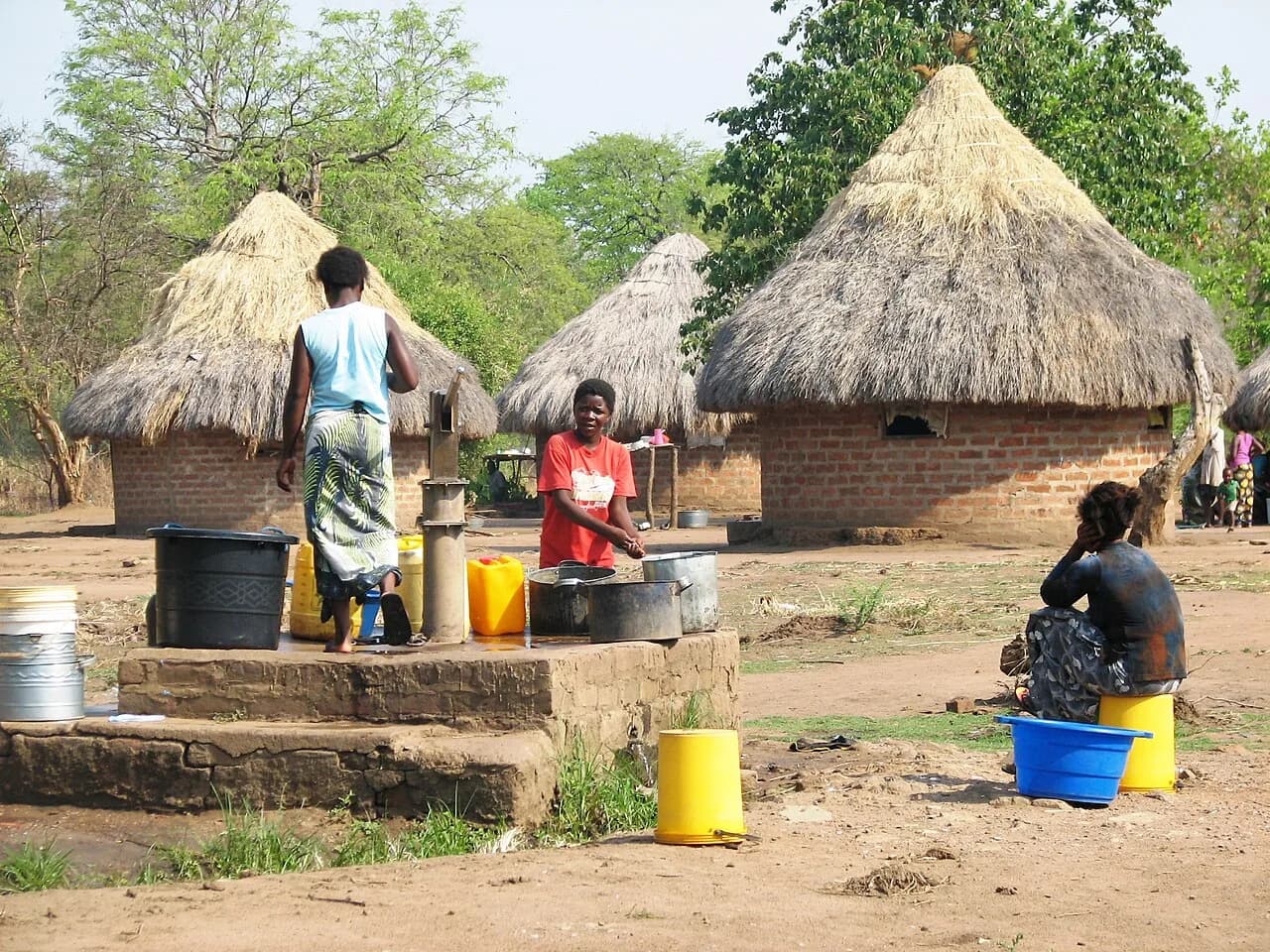
The first day of our well opened in Chad's Kanem region: the moment the two-hour water journey came to an end.
From the field teamRead
Water wells and orphan sponsorship
Chad is a landlocked country in northern Central Africa, located between the Sahara and the Sahel; its capital is N'Djamena. According to World Bank data, its population was 21 million in 2025; according to a 2020 estimate by the Pew Research Center, 56.4% of the population is Muslim and 38.9% Christian. The official languages are French and Arabic. According to INSAMER's country profile, the main communities are the Chadian Arabs, the Sara, the Maba, the Kanembu and the Toubou. The transition period in the country ended with the 2024 presidential election; the eastern border is affected by the war in Sudan, and the Lake Chad basin by armed group violence. Per capita income was US$1,022 in 2025; in 2022, 39.5% of the population lived below the international extreme poverty line of US$3 a day (2021 purchasing power parity). In UNDP's 2025 Human Development Report, Chad ranks 190th out of 193 countries.
Chad hosts one of the largest refugee populations on the continent. According to data from the Office of the United Nations High Commissioner for Refugees (UNHCR), at the end of 2025 there were more than 1.5 million refugees and approximately 220,000 internally displaced persons in the country. According to the Cadre Harmonisé, during the June–August 2026 lean season 3.2 million people, or 17.5% of the analysed population, are experiencing acute food insecurity at Phase 3 or above; this is the highest rate among the countries analysed. Of the approximately 987,000 Sudanese refugees who are not included in this figure and were analysed separately in eight departments, 332,000 are also in the same situation.
According to the WHO/UNICEF Joint Monitoring Programme (JMP), in 2024, 52.2% of the population had access to at least basic drinking water, while access to safely managed drinking water was only 6.3%; access to basic sanitation was 13.1%. According to UN estimates, the under-five mortality rate was 97.3 deaths per 1,000 live births in 2024. According to UNICEF's joint malnutrition estimates, 31.5% of children under five are stunted (2024); in a 2022 survey, the acute malnutrition rate was 7.8%. According to UNESCO data, 24.8% of primary school-age children were out of school in 2024; the adult literacy rate was 30.6% in 2019.
According to the UN 2026 Humanitarian Needs and Response Plan, 4.5 million people are in need of assistance and 3.4 million people are targeted. Of the US$986.1 million plan, approximately US$540 million is allocated to refugees; according to data from UN OCHA's Financial Tracking Service (FTS), the plan was 46.3% funded as of 10 November 2026. The plan states that 2.9 million people each are in need in food security and in water, sanitation and hygiene, 2.1 million in nutrition, 1.7 million in health and 1.4 million in education. Clean water, food, child nutrition and essential health services stand out as the most urgent needs in refugee camps and host communities.
Sources: INSAMER; UN OCHA (HNRP 2026, FTS); UN News; UNHCR; Cadre Harmonisé (CILSS/FAO/WFP); WHO/UNICEF JMP; UNICEF; UNESCO; World Bank; UNDP; Pew Research Center. Data: 2019–2026.
In Chad our work is centred on the capital N'Djamena and on Moundou, and also covers the villages around Bongor, Sarh, Doba and Abéché. Activities are planned together with our field partner.
The main area of work in the country is water wells. The wells opened under the N'Djamena and Moundou Water Wells Projects are handed over for the shared use of the villages, and each well is conveyed to its donor together with its location and photographic record. Wells that are opened are placed on a maintenance schedule.
Alongside the water work, orphan sponsorship and qurbani organisation are carried out in the country.
Water WellThe first day of our well opened in Chad's Kanem region: the moment the two-hour water journey came to an end.