 Qurbani
Who Will Remember Us?
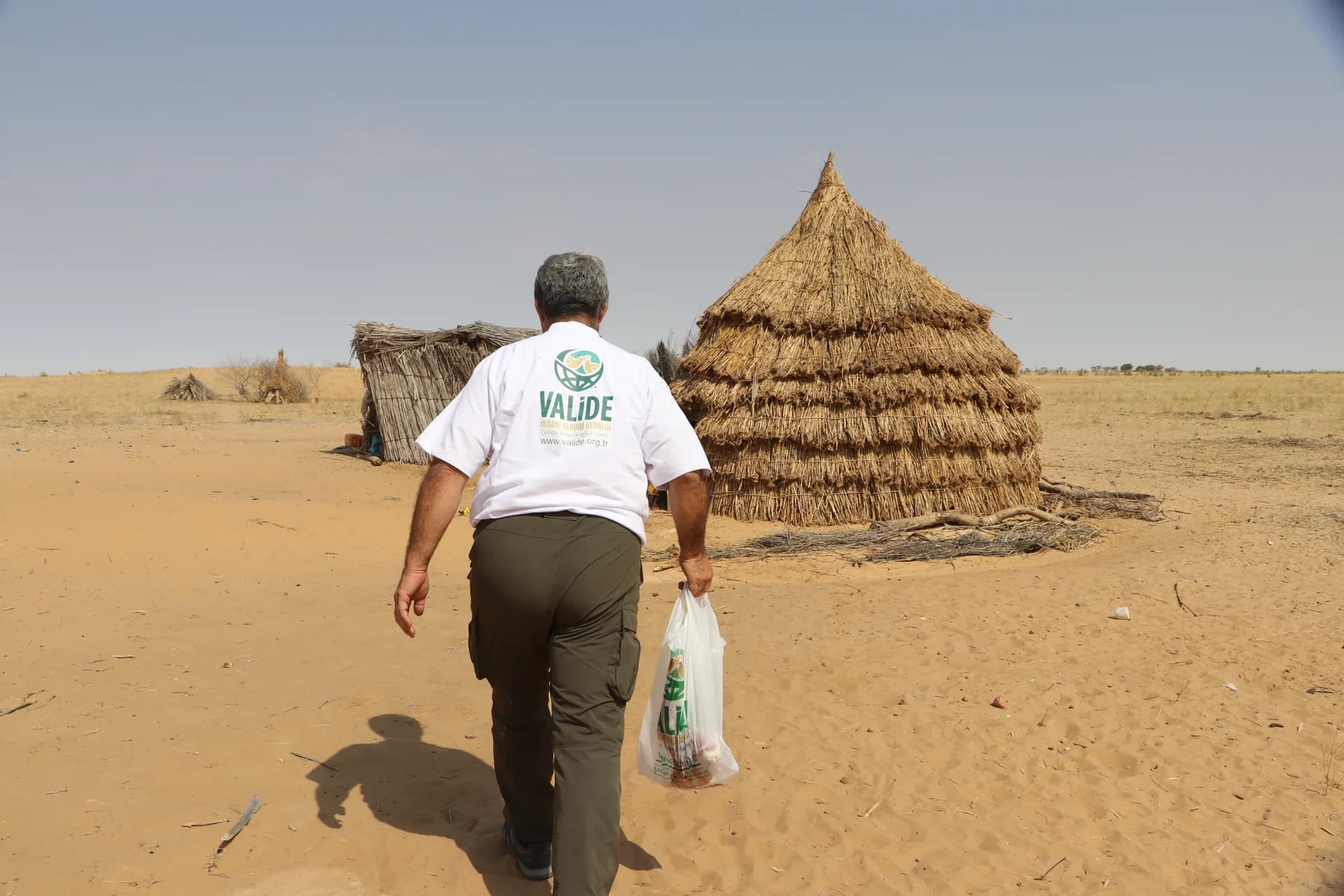
In Kenya, during Eid al-Adha, with a family who fled the conflicts in Somalia: a child's question and the answer at the door.
From our field team in KenyaRead
Qurbani and distribution of the Holy Qur'an
Kenya lies on the Indian Ocean coast of East Africa; its capital is Nairobi. According to the World Bank, its population was approximately 57.5 million in 2025. According to the Pew Research Center's 2020 estimate, 10.9% of the population is Muslim; the official languages are English and Swahili. In Kenya, one of the region's largest economies, the arid and semi-arid lands (ASAL) in the north and north-east are severely affected by recurrent droughts. GDP per capita was approximately US$2,363 in 2025; 45.5% of the population lives below the international poverty line of US$3 a day (2022). In UNDP's 2025 Human Development Report, Kenya ranks 143rd out of 193 countries.
The main drivers of humanitarian needs in Kenya are climate-related shocks and a protracted refugee presence resulting from conflicts in neighbouring countries. Owing to the drought that has deepened since late 2025, the IPC reported in March 2026 that 3.3 million people in the ASAL areas were experiencing high levels of acute food insecurity, representing an increase of 52% in one year. According to the September 2026 update, in the July–October 2026 period, 2.7 million people are in Phase 3 or above and 348,000 people are in Emergency (Phase 4); a limited improvement is expected between November 2026 and January 2027 with the short rains. Kenya also hosts more than 864,000 refugees and asylum-seekers, the majority of them Somali; this population lives mainly in the Dadaab and Kakuma camps and in the Kalobeyei settlement.
According to data from the WHO/UNICEF Joint Monitoring Programme (JMP), in 2024, 65.6% of the population had access to basic drinking water and 40.9% to basic sanitation. The under-five mortality rate is 38.8 per 1,000 live births (2024). Among children under five, 17.6% are stunted and 4.5% are wasted (2022). The IPC analysis of March 2026 found that acute malnutrition had reached 'Extremely Critical' (Phase 5), the most severe level, in Mandera, in North Horr in Marsabit, and in southern and eastern Turkana. The World Bank draws attention to a marked decline in the assistance reaching households in refugee camps.
There is no UN-coordinated country-specific humanitarian response plan for Kenya; the drought response is carried out by the Government, UN agencies and civil society. According to the short rains season assessment published by WFP in early 2026, 3.3 million people need humanitarian assistance. The drought appeal of the International Federation of Red Cross and Red Crescent Societies (IFRC) aims to reach 300,000 people. The key needs are drinking water supply in the arid northern areas, livelihood support for pastoralist households and treatment of malnutrition among children. Maintaining food, clean water, health and education services in refugee camps and protecting vulnerable and orphaned children are also of critical importance.
Sources: INSAMER; IPC; WFP; UNHCR; IFRC; WHO/UNICEF JMP; World Bank; UNDP; Pew Research Center. Data: 2020–2026.
In Kenya our work is carried out in the north-east of the country, around Garissa.
In addition to qurbani, votive (nadhr) and aqiqah sacrifices have been carried out in the region and distributed to people in need. Copies of the Holy Qur'an have also been distributed in the country.
QurbaniIn Kenya, during Eid al-Adha, with a family who fled the conflicts in Somalia: a child's question and the answer at the door.